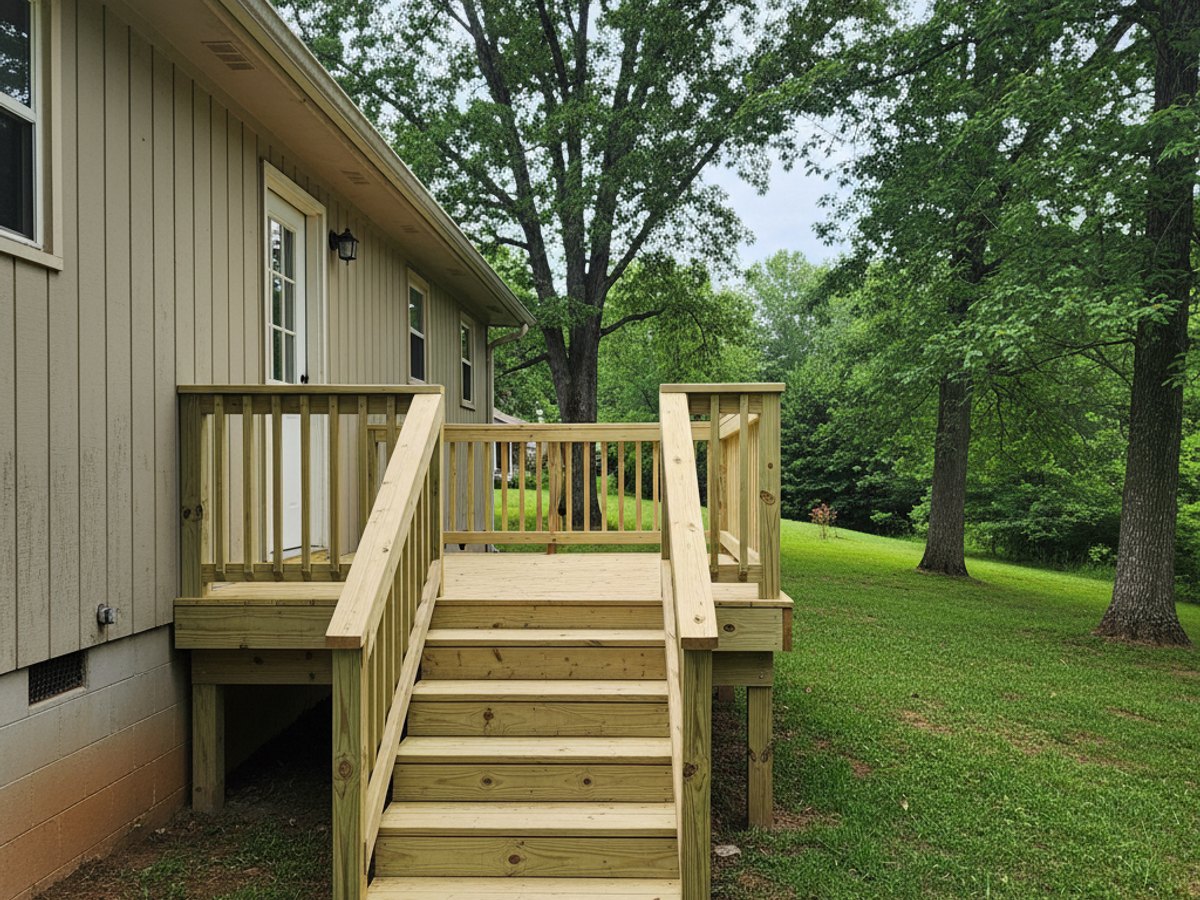
Most deck problems don't start with bad lumber. They start with something nobody looked at before the first post hole got dug. A deck is only as good as what it's sitting on and what it's bolted to, and in this part of Tennessee that means paying attention to a few things that have nothing to do with the decking boards themselves. Here's what's worth ten minutes of your time before anyone shows up with a post hole digger.
What's actually under your yard
Collierville sits on silt loam over clay, and a lot of lots have fill dirt from when the subdivision was graded, especially in the newer developments off Houston Levee and out toward Shelby Farms. Clay holds water and swells when it's wet, then shrinks and cracks when it's dry. That movement is exactly what a deck footing has to resist. If a footing isn't dug deep enough or wide enough, you'll see it in a year or two as a post that's slightly out of plumb or a deck that's developed a soft bounce on one corner.
It's also worth knowing what else is down there. Older homes near the downtown square were built long before anyone mapped utility lines the way they do now. Call for a utility locate before digging, full stop. It's free and it takes a couple of days to come back, and it saves you from putting a post through a gas line or an old clay sewer pipe nobody remembers is there.
Water and grading
A lot of Collierville lots are flat, which sounds easier but actually makes drainage trickier. Flat ground plus clay soil means water doesn't soak in, it sits. Walk your yard after a hard spring rain, which around here usually means March through May, and watch where the water pools. If it's pooling right where you want footings, that spot needs to be addressed before concrete goes in, not after.
Check where your downspouts dump too. A deck built right next to a downspout outlet is going to see standing water against the framing every time it rains, and standing water against pressure-treated lumber for years will eventually win, treated or not.
Permits, setbacks, and the HOA
The Town of Collierville requires a permit for most deck construction, and that permit review checks footing size and depth, ledger attachment, and guardrail height, among other things. A survey isn't always required but it's smart to confirm your property lines and setback distances before you build, especially on corner lots or anything backing up to a greenbelt. Many of the newer subdivisions, places like Schilling Farms or Forest Creek, also have an HOA architectural review process that runs separately from the town permit. Skip either one and you can end up tearing out work you just paid for.
The structure itself
This is where most of the long-term problems hide, because you can't see them once the boards go down. Footings in this area generally need to go at least 12 inches below grade, and the depth and diameter both depend on soil bearing and the load the deck carries. The ledger board, the piece that attaches the deck to the house, has to be lag bolted or through-bolted into the rim joist or framing, not just nailed to siding. If your house has brick veneer, that connection gets more complicated because the deck can't just hang off the brick. This is one of the most common failure points on older decks we get called to repair, a ledger that was never properly bolted in the first place.
Joist spacing matters for how much bounce you'll feel underfoot, and most residential decks here run joists at 16 inches on center. Before anyone pours concrete, ask how long before the deck can be framed on top of it. Concrete needs a few days of cure time before it can carry real load, and rushing that step is how footings settle unevenly.
Material and code details that get missed
Memphis-area summers are hot and humid, June through August especially, and that affects how wood moves. Pressure-treated pine will shrink as it dries out after installation, which is why gaps between boards get set slightly tighter at install than they'll look a few months later. Composite decking doesn't shrink the same way but it does expand with heat, so fastener spacing and end gaps have to account for that or boards will buckle.
Code also sets specifics most homeowners don't think about until an inspector points them out: guardrails are required once a deck surface is 30 inches or more above grade, and they need to be at least 36 inches tall. Stair rise and run has to stay consistent step to step, usually around 7.75 inches of rise, because an inconsistent stair is one of the most common things that trips people up, literally.
A few more worth a quick look
- How old is the house, and is there an existing deck attachment point that was done right the first time, or will the old ledger need to come off entirely.
- Is there a mature tree near the build site. Roots can interfere with footing placement, and cutting through major roots can stress or kill the tree.
- What's your plan for staining or sealing. Wood decking here generally needs a fresh coat every one to three years given the humidity and UV exposure, and that's a cost worth planning for up front, not after the first winter.
None of this is complicated, but it's easy to skip when you're excited to get a deck built and just want to see boards go down. A contractor who asks about your soil, your drainage, and your HOA before talking about railing styles is one who's actually thought about what happens to the deck five years from now. That's the approach we take on every job at Absolute Deck Solutions, whether it's a straightforward rebuild or a multi-level deck on a sloped lot.