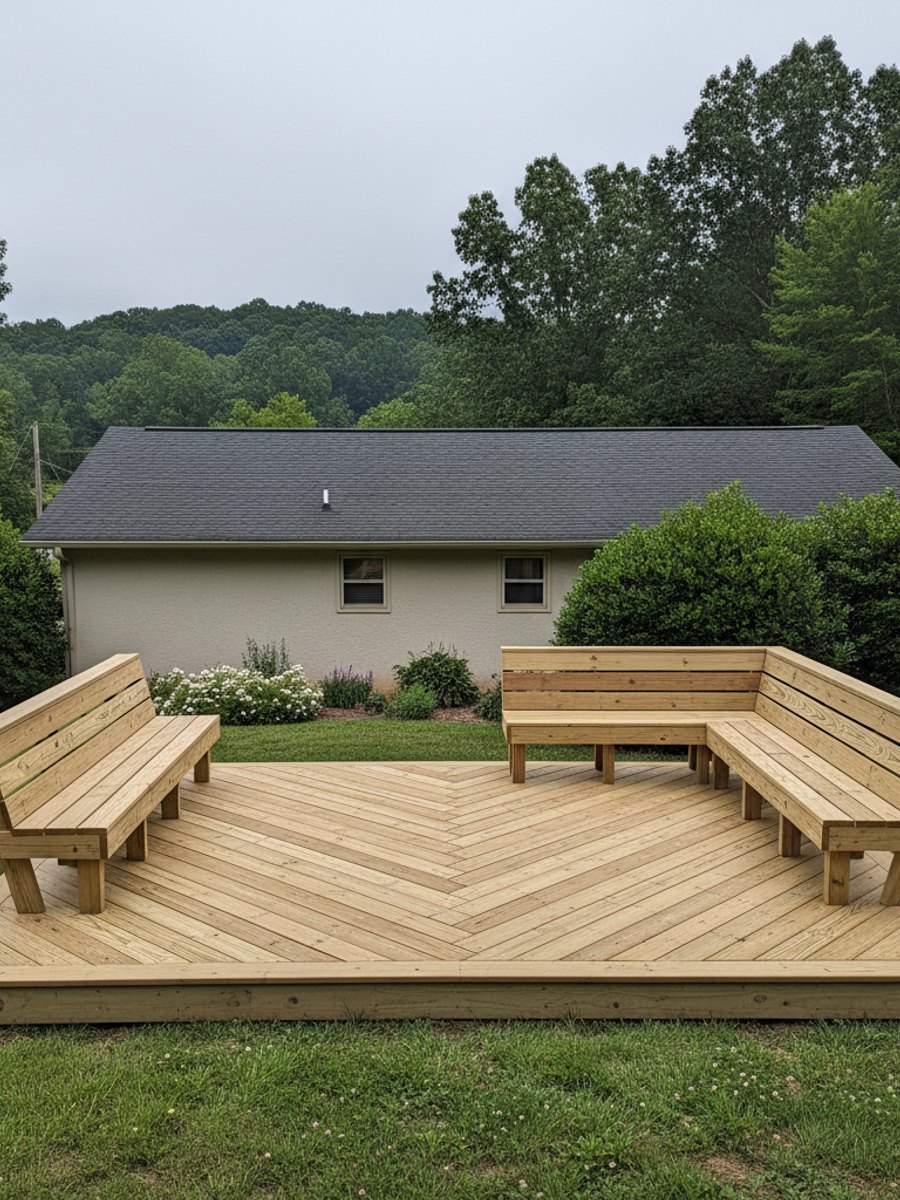
Homeowners usually ask about timing because they want nice weather to sit outside while the crew works. That's not really the question that matters. The question is what the ground is doing, what the lumber is doing, and what the forecast is doing to a stain or sealant that needs time to cure. In Collierville those three things don't line up the way most people assume.
What the clay does to a footing
Most lots around here sit on heavy clay, sometimes with a layer of loess silt on top. Clay holds water. In March and April, after a wet Tennessee spring, that clay can be saturated six to eight inches down and soft underfoot. Dig a footing hole in that condition and you're setting a post in soup. Let the same soil dry out in late July and it shrinks and cracks, sometimes leaving a gap around a footing that was poured when things were wetter. Neither extreme is ideal for pouring concrete that needs to bond to stable soil.
Footings here typically land somewhere around 12 to 18 inches down, deep enough to get past the frost line and onto soil that isn't moving with every rain. The best window to dig and pour is when the clay is neither saturated nor bone dry, which in practice means late fall or early spring, after the ground has had a few dry days but before summer heat sets in.
Fall is the sweet spot, and here's why
September through November is when most of the variables line up. Daytime temps sit in the 60s and 70s. Humidity drops off from the thick, sticky air of July and August. Rainfall tapers compared to the spring pattern, so there are longer dry stretches to work with. Concrete cures better in that temperature range too, it needs to stay above 40°F for the first 48 hours or the strength gain slows way down, and summer slab pours can skin over too fast in direct sun and crack.
Spring, roughly March through May, is the second-best window. It's workable, but it's also Tennessee's wet season, and a crew can lose several days in a row to rain delays. Winter is fine for framing if you catch a dry stretch, Collierville doesn't get deep freezes often, but when an ice storm does roll through in January or February, nobody's climbing a ladder that week.
Permits and the inspection calendar
Deck work over a certain size or height generally needs a permit through the town, and that usually means a footing inspection before concrete goes in the ground and a framing inspection before the boards go down. Spring is the busiest season for building departments everywhere, Collierville included, because everyone wants a deck ready for summer. That means longer waits for an inspector to show up, which can stall a project for a week or more at exactly the point where delay costs the most. Pulling a permit in the fall or winter, when the inspection queue is shorter, often means faster turnaround from the first dig to the final sign-off.
If the property backs up to a greenbelt or sits near a drainage easement, it's worth checking setbacks before design, not after. Some neighborhoods also run through an HOA that has its own review on top of the town's, which adds a week or two to the front end no matter what season it is.
Staining and sealing runs on a different clock than building
This is where people get the timing backwards. New pressure-treated lumber comes out of the mill still carrying moisture, sometimes close to 20 to 30 percent. Stain and sealer won't penetrate wood that wet, it just sits on top and peels. A new deck typically needs to season for anywhere from six weeks to a few months before it's ready to take a finish, depending on the season it was built and how much sun it gets.
Once it's ready, the finish itself needs a run of dry days to cure, usually 48 to 72 hours without rain, and it needs temperatures roughly between 50°F and 90°F. July and August in Collierville blow past that upper number most afternoons, and the humidity slows drying time even when it's not actively raining. Early fall, after the lumber has had a summer to dry out, is often the best stretch of the year to stain a new deck. Spring works for re-staining an older deck, as long as you catch a dry week between storms.
Older lots versus newer subdivisions
Streets near the historic square and older sections of town were mostly built in the 1960s through 80s, and decks on those lots often sit on footings that were poured to a different standard than what's required now, or none at all in the case of an old deck that was nailed to the house with no real ledger attachment. Working on those properties usually means finding out what's already there before deciding whether to repair or start over.
Newer subdivisions like Schilling Farms or the Forest Hill area were graded as part of a planned development, so the soil is more consistent and the original drainage is usually better documented. That doesn't mean there's nothing to watch for. Builders sometimes leave construction debris buried near the foundation, and a post hole can hit a chunk of broken concrete or a scrap of PVC pipe that nobody put on a drawing.
There isn't one single month that's right for every job. A composite deck install can happen almost any time of year since the material doesn't care about moisture content the way wood does, though it does expand and contract more than people expect in July heat, so gapping has to account for that. A full resurfacing with new structural framing is a different timeline than a weekend of board replacement. If you want a straight answer for your specific yard, soil, and the job you're actually planning, that's a conversation worth having before you pick a date. Absolute Deck Solutions works through all of it with homeowners around Collierville year-round, not just in the months everyone assumes are the only option.